


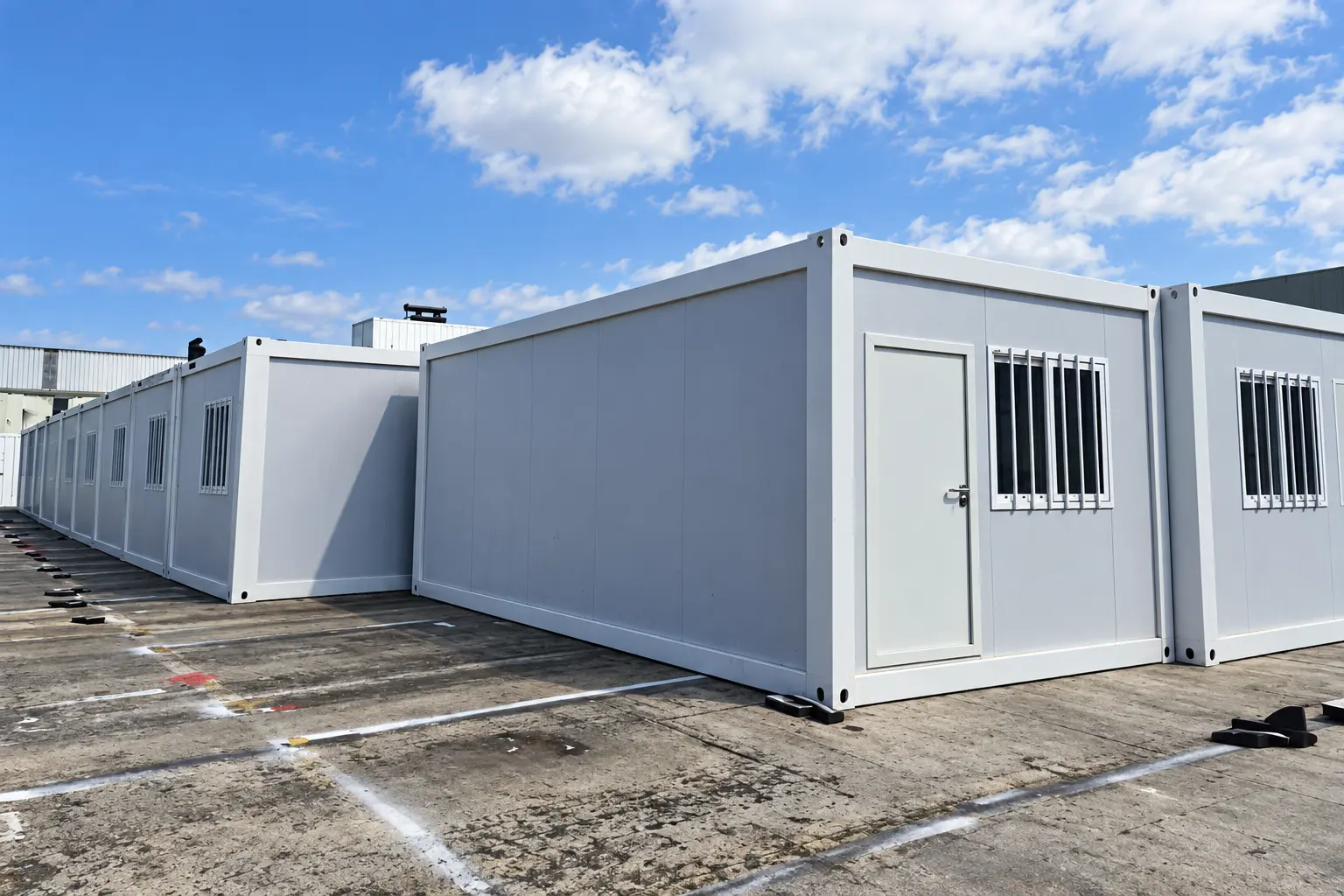
Remote worker accommodation should be planned as a connected logistics and installation sequence. Packing, route access, site readiness, lifting, assembly and utility interfaces must describe the same proposed system.
Provide the port, inland route, site access, unloading area, available equipment and installation responsibilities before confirming the module configuration and shipment plan.
Define the delivery brief before selecting a system
Record the project location, workforce phases, required buildings, target sequence and operating date. Then add the route conditions: port restrictions, customs requirements, vehicle limits, delivery hours, road condition, bridge or height limits, turning space and seasonal access constraints.
The supplier needs this information to coordinate module dimensions, packing, shipment quantities and site handling. A configuration that can be manufactured does not automatically fit the available route or installation area.
Compare the offered packing evidence
Flat-pack and detachable systems use different component and packing arrangements, but supplier terminology is not standardised. Request configuration-specific packing drawings rather than relying on a general statement about transport efficiency.
| Stage | Buyer input | Supplier evidence | Interface to confirm |
|---|---|---|---|
| Packing | Required building quantities and delivery batches | Packing drawings, package dimensions, weights and shipment quantities | Loose items, protection, identification and unloading order |
| Ocean transport | Destination port and import requirements | Proposed shipment format and document list | Freight basis, customs documents and port handling |
| Inland delivery | Verified route and vehicle restrictions | Package data needed by the appointed carrier | Permits, delivery windows, escort and temporary storage |
| Unloading | Site access, bearing area and available equipment | Lift points, sequence and handling instructions | Crane or forklift scope, exclusion zones and weather limits |
| Assembly | Prepared foundations, labour and utilities | Method statement, drawings, tools list and inspection points | Supervision, testing, rectification and handover |
Verify the port and inland route
Use package dimensions and weights to check the route with the appointed freight forwarder and local carrier. Confirm port handling, customs clearance, available vehicle types, road restrictions, delivery permits and the final approach to the site.
Define where packages will be received, inspected and stored if immediate installation is not possible. The storage plan should maintain package identification, weather protection, safe stacking and access to the items needed first.
Review each Southeast Asia destination
Southeast Asia is not one logistics route. Projects in the Philippines, Thailand, Vietnam, Malaysia or Indonesia can involve different ports, import documents, inland carriers, road access and local approval processes. The delivery plan should therefore be checked for the actual country and site rather than copied from another destination.
For an early review, provide the nearest practical port, the final site location and any known access restrictions. The freight forwarder, local carrier, contractor and modular supplier can then identify which route, package and site details still need confirmation before the shipment schedule is fixed.
Complete site readiness before dispatch
Foundations, finished levels, drainage, temporary roads, lifting positions and external utility routes should be checked against the approved building and installation drawings. Record hold points so unresolved civil or service work is visible before shipment.
Confirm temporary power, water, lighting, worker welfare, security and weather protection for the installation team. Assign responsibility for surveys, setting out, tolerances and correction of non-compliant site work.
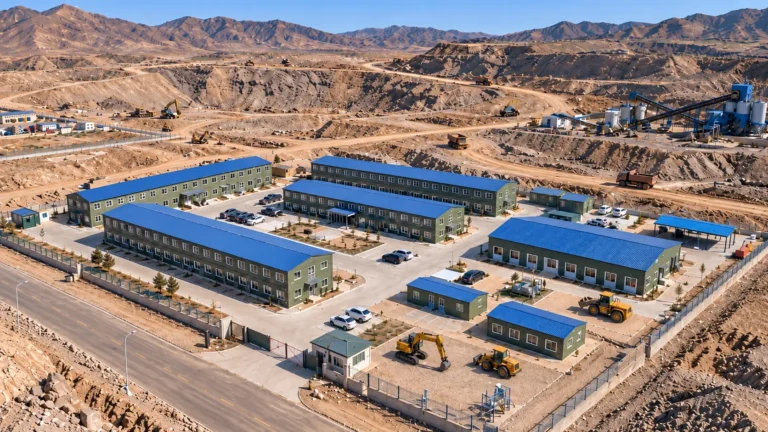
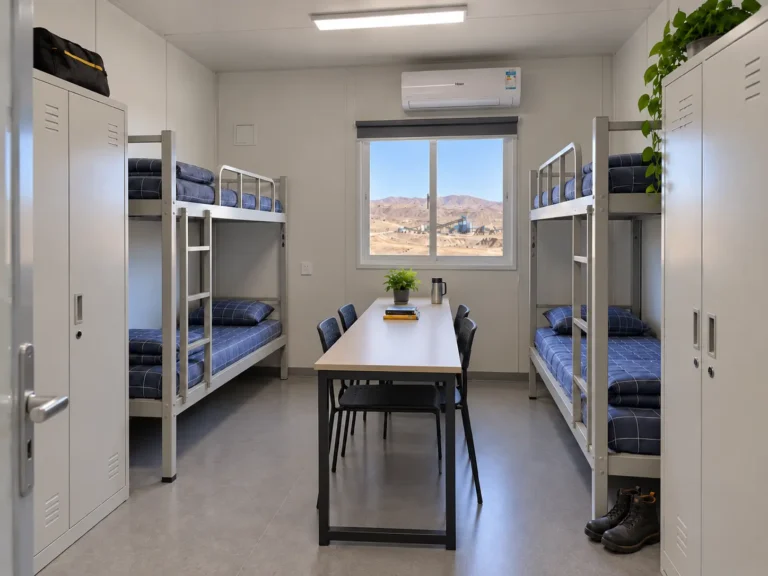
Coordinate unloading and assembly
The unloading order should match the installation sequence. Request package marks, a delivery register, lift information, assembly drawings, tools and consumables list, crew requirements and inspection records for the offered configuration.
Review the working radius and capacity of lifting equipment for the actual position of each package. Establish traffic separation, exclusion zones, safe access and storage locations with the responsible site team before deliveries arrive.
Coordinate services, testing and handover
Identify which electrical, water, drainage, ventilation, fire and data components are factory installed, shipped loose or completed locally. Connection details and testing responsibilities should be shown on coordinated drawings and the responsibility matrix.
Handover should include agreed inspections, test records, approved changes, operating information, maintenance requirements and a clear defects process. The building should not be treated as complete only because the modules have been assembled.
278-unit Philippines PV camp reference
The original article referenced the published 278-unit flat-pack modular camp for a PV engineering project in the Philippines. The documented functional scope includes accommodation, office and dining facilities.
The project remains relevant as evidence of a delivered multi-building camp. Its recorded quantity and functions do not establish the packing, installation duration or logistics requirements for another site. Review the complete Philippines PV engineering camp case study.
Compare the complete logistics boundary
Separate factory supply, export packing, ocean freight, insurance, port charges, customs, inland transport, unloading, lifting, site labour, supervision, utility connections, testing and handover. Each bidder should price or exclude the same boundary.
Compare the total delivered and installed scope rather than the module price alone. A lower factory price may not remain lower when shipment quantities, local handling, equipment and site work are added.
Remote accommodation logistics checklist
- Project location, port of entry and verified inland route
- Building list, quantities, phases and required delivery order
- Package dimensions, weights, markings and shipment quantities
- Customs, documentation and local transport responsibilities
- Site access, unloading, storage and lifting conditions
- Foundation, drainage, external utility and temporary-work readiness
- Installation method, labour, tools, supervision and inspection points
- Factory-installed, shipped-loose and locally completed services
- Testing, records, handover and defect responsibilities
- Commercial exclusions and programme assumptions
Remote accommodation logistics FAQ
Which information is enough for an initial logistics review?
Start with the destination country, final site location, intended building functions, approximate quantity and target timing. If available, add the preferred port, site plan and known access constraints. Missing details can be identified during the first technical review.
Should the building system be selected before the delivery route is checked?
The two decisions should be coordinated. Module dimensions, packing method and shipment quantities affect port and inland transport, while route limits and site handling can influence which modular format is practical.
Who normally arranges ocean freight and inland transport?
The agreed commercial terms decide. The buyer, supplier or appointed freight forwarder may manage different stages. Each proposal should state the freight basis, port responsibility, customs boundary and inland-delivery scope.
What must be ready before modules or packages arrive?
The required readiness depends on the system, but it commonly includes approved foundations, access roads, unloading and lifting areas, temporary storage, external utility routes and a responsible site team. The approved drawings and method statement define the final requirements.
Can one Southeast Asia logistics plan be reused for another country?
Not without a new review. Ports, import documentation, inland carriers, vehicle restrictions, local approvals and final-site access can differ by country and project. Reconfirm the route and responsibilities for every destination.
Approve one coordinated delivery sequence
Approve the shipment only when the packing plan, route review, site-readiness record, unloading plan, assembly method and responsibility matrix align. Changes to the module layout or delivery batches should trigger a review of the related logistics and installation documents.
Provide the site and route information with the accommodation schedule. Premium Modular House can then identify the packing, handling and installation information required for the proposed configuration.