








Shipping Modular Buildings from China
What a China-based supplier needs from you to estimate container loading, sea freight and delivery to site, and which costs to settle before you order.
Short answer: A supplier can only estimate shipping and site delivery once it knows three things: what is being shipped, where and on what terms it is going, and how it will be received on site. Send:
- the building system, configuration, quantity and layout or room schedule;
- the fit-out, furniture and accessories that travel with the buildings;
- the destination country and port, or the delivery address if you want a price to site;
- the delivery term you want quoted, and who handles each transport stage;
- the date the buildings must be on site, and any phasing;
- the access route, unloading equipment and storage area at the site.
Ask for the reply as a packing list and a loading plan for your configuration, not as a general units-per-container figure.
Start with what is being shipped
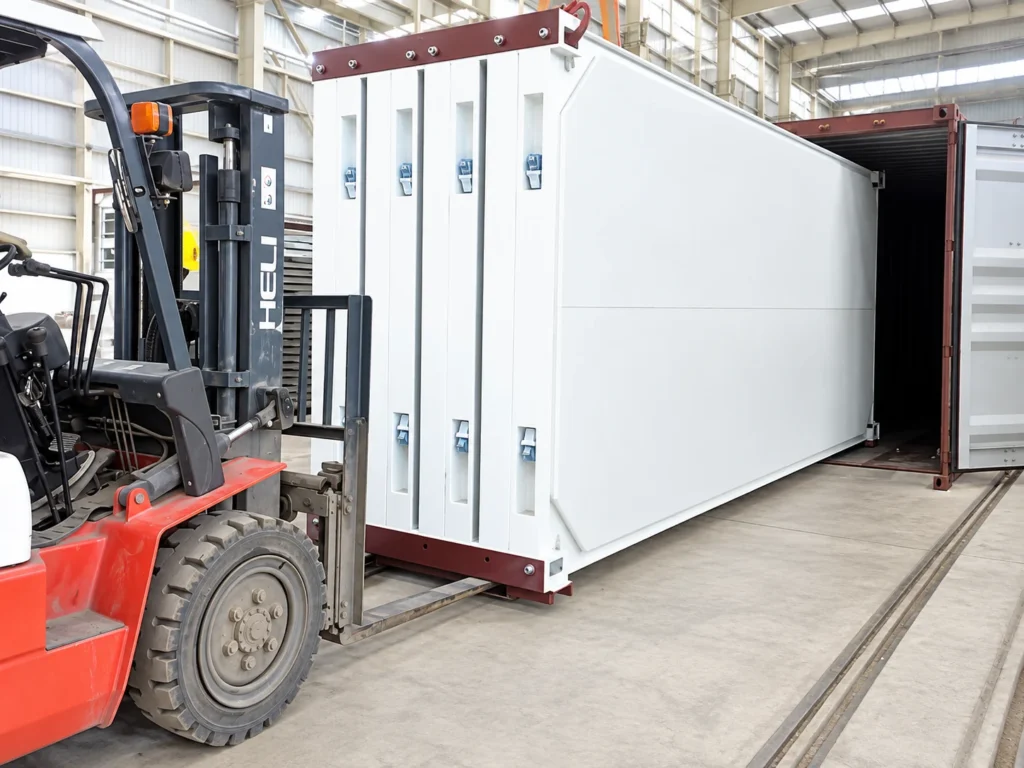
The number of containers drives most of the freight cost, and the container count follows the packing plan. That plan depends on the system, the configuration, the fit-out and the packing method, so the same product can load differently from one order to the next.
Premium Modular House (PMH) publishes a loading reference for each of its container house systems. They are planning figures for a first estimate, not loading commitments:
| System | Published reference per 40 ft high-cube container | What can change it |
|---|---|---|
| Flat-Pack Container House, 20 ft reference (5,990 × 2,438 × 2,896 mm external) | 6–8 sets as a preliminary estimate, subject to the project loading plan | Configuration, packed dimensions and weights, and separately packed fittings |
| Detachable Container House | About 16 units | Upgraded components and additional fittings |
| Expandable Container House, 20 ft with 700 mm fold | 6 folded units | The selected configuration |
| Expandable, standard 20 ft | 2 folded units | The selected configuration |
| Expandable, 30 ft | 1 folded unit | The selected configuration |
| Expandable, 40 ft | Not published; follows the agreed transport plan | Layout and options such as a terrace |
These figures show how many sets or folded units fit in one shipping container under each reference packing arrangement. For a cost comparison, ask for the usable floor area delivered per container as well as the total number of containers. The flat-pack and expandable comparison shows how to compare floor area per container load.
For a quotation, ask for a packing list that shows package dimensions, weights, lifting points and the number of packages per container or truck. Fit-out changes the plan as well: furniture, sanitary fittings and spare parts take space, so list everything that should travel with the buildings.
Say where the buildings are going, and on what terms
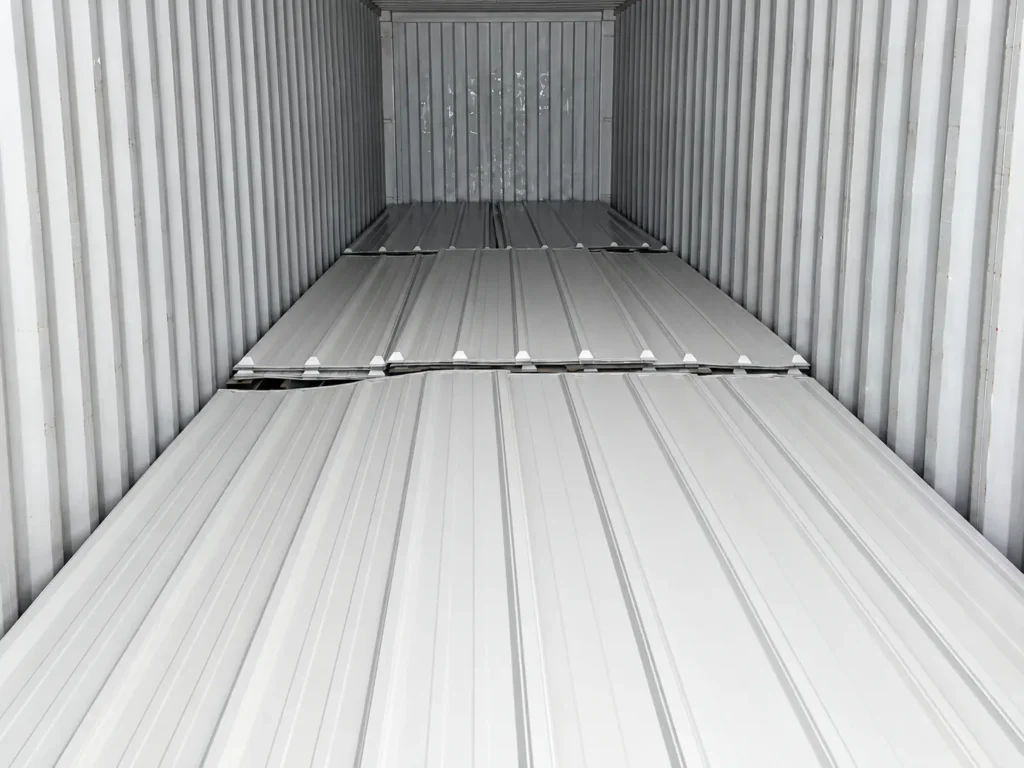
Destination. Give the country and the port of discharge. If you want a price to site, add the delivery address and the inland route. For flat-pack orders, PMH notes that the loading plan, sea-freight route, destination port and inland access together decide the transport method.
Delivery term. Name the term and the place you want quoted, for example a price at the port of loading or a price delivered to your site. The term decides which stages the price covers: export clearance, ocean freight, insurance, destination charges, import duties and local haulage. The ICC's Incoterms® rules set out the tasks, costs and risks that each term places on the seller and the buyer.
Timing and phasing. Give the date the buildings must be on site, and say whether they should arrive in phases. A camp that opens in stages may need each shipment to hold complete buildings for one stage, rather than part of every building.
Documents. Tell the supplier which documents your importer or customs broker needs. PMH confirms the commercial invoice and packing list for each order, confirms bill of lading details with the ocean freight arrangements, and discusses certificate-of-origin requirements for the destination. Its freight-forwarding team arranges container loading, customs clearance and ocean shipping, with tracking through the shipment. Confirm which clearance a quotation covers: export clearance in China and import clearance at the destination are separate steps.
Ask, too, what loading records you will receive. For flat-pack shipments, PMH photographs the cargo, packaging, shipping marks, each loading stage, and the container and seal numbers.
Describe the delivery to site
Delivery problems often appear on the last part of the route. Give the supplier enough to plan it.
Access route
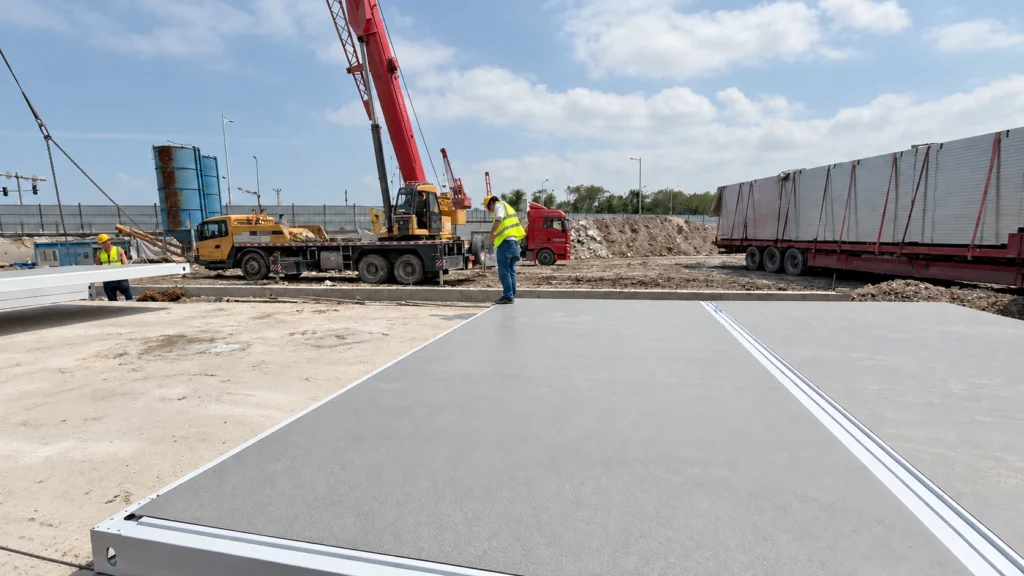
Describe the road from the port to the site: weight and height limits, bridges, tight turns and any unpaved final stretch. Send photographs and a marked-up site plan rather than a description such as "good access".
Unloading and lifting
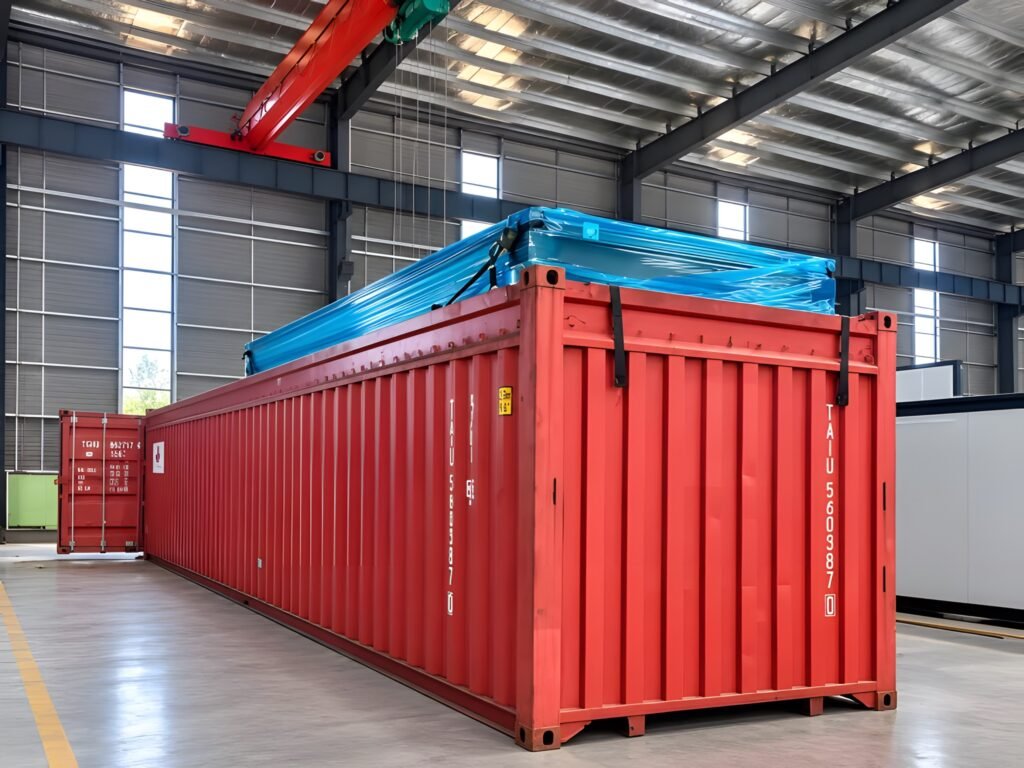
Name the equipment that will actually be on site, such as a forklift, telehandler or crane, with its capacity, and compare it with the heaviest lift. Flat-pack and detachable kits travel as packages whose weights appear on the packing list. Expandable houses travel as complete folded units: PMH lists net weights of 2.1 t for the 700 mm model, 3.12 t for the standard 20 ft, 4.25 t for the 30 ft and 5,600 kg for the 40 ft. For the 30 ft model, also check the 6,220 mm unfolded width against the space at each position.
Storage and order of arrival
Plan a dry, level and secure storage area near the assembly positions. Ask how packages are marked by unit or phase, so the site team can store them in assembly order. The remote-site checklist for detachable container houses covers storage and receipt checks in more detail.
Site readiness
Foundations, levels and service connections should be ready before the first delivery, or containers may wait at the port or on site while charges build up. The flat-pack camp site preparation checklist lists the buyer-side works.
Responsibility for each stage
List each stage from factory to installed building and name who handles it: the supplier, your freight forwarder, your customs broker, a local haulier or your site team. A stage marked "by others" still needs a named owner.
Settle the costs outside the unit price
A unit price rarely covers the whole route. For its expandable houses, PMH lists freight, installation, site crane fees and taxes as separate from the unit price. Its standard 20 ft schedule includes packaging and container loading, but not taxes or freight.
Ask for building supply, shipment and site costs to be itemised, then check each stage:
- packing and loading at the factory;
- inland transport and export clearance in China;
- ocean freight and insurance;
- destination port charges, import duties and taxes;
- haulage from the port to the site;
- unloading, lifting, storage and any waiting time.
Ask how long the freight figure remains valid. Sea freight is often quoted with a shorter validity than the buildings, so parts of a quotation can expire at different times.
Send one shipping brief
A single brief lets every supplier price the same delivery. Include:
- the building system, configuration, quantity and layout or room schedule;
- the fit-out, furniture and accessories to be shipped;
- the destination country, port of discharge and, for a price to site, the delivery address;
- the delivery term and named place to be quoted;
- the required-on-site date and any phasing;
- photographs of the access route and a site plan;
- the unloading and lifting equipment, with capacities;
- the storage area and the date the site will be ready;
- the documents your importer needs.
Ask each supplier to return a packing list, a loading plan and an itemised delivery quotation, with each cost marked as included, optional or excluded. The flat-pack procurement guide shows how to close the remaining quotation gaps line by line.
Send your shipping brief to PMH. Include the destination, delivery term, quantity and site access details, so the reply can cover loading, freight and delivery together.
Questions buyers ask
How many modular buildings fit in one container?
It depends on the system and its configuration. PMH's published references range from one folded 30 ft expandable house to about 16 detachable units per 40 ft high-cube container. Use the supplier's packing list for your configuration as the shipping basis.
Can a supplier in China quote delivery to our site?
Ask for it. Send the delivery address, access route and unloading arrangements, and ask the supplier to show which stages its price covers and which stay with you or your forwarder.
Which documents travel with the shipment?
Usually a commercial invoice, a packing list and a bill of lading. A certificate of origin may be needed for the destination. Confirm the list with your customs broker before the goods ship.
Do we need a crane to unload?
That depends on the heaviest package or unit and on the site. Expandable houses have listed net weights from 2.1 t to 5,600 kg, while flat-pack and detachable kits travel as packages with their weights on the packing list. Ask for the heaviest lift and its lifting points, then plan the equipment for your site.