








Detachable Container Houses for Remote Sites
What to check before buying detachable container houses for a remote project site, from the component kit and spare parts to assembly, lifting, services and acceptance.
Short answer: Before you buy detachable container houses for a remote project site, confirm that the site can receive, store and assemble a kit of separate components without outside help. Check:
- the component and packing lists;
- the spare fixings sent with the order;
- who will assemble the units, and how;
- how each package will be unloaded and lifted;
- the foundation and climate inputs;
- the power and water connections;
- how every unit will be inspected and accepted.
Put these checks into one written brief, so that every quotation answers the same scope.

Why a remote site changes the checklist
A detachable system is usually offered as separate structural members, wall panels, doors, windows and accessories, which are assembled into complete units at the destination. That keeps shipping volume down, but it moves more of the work to the site.
Premium Modular House (PMH) flat-pack container houses work differently. They are built around pre-assembled roof and floor modules, with columns, wall panels, doors and windows matched to the project and assembled on site. If you are still choosing between the two systems, start with the detachable and flat-pack comparison.
A remote project is usually far from the supplier, from spare parts and from specialist equipment. A missing fixing, a damaged panel or an unclear drawing can then stop assembly for days rather than hours.
Every check below comes back to one question: can this site receive, store, assemble and accept the kit on its own? PMH offers detachable container houses for projects where component delivery and local assembly suit the site.
1. Confirm what arrives in the kit
Ask for documents that let your team check the delivery against the order before any assembly starts.
| Document | What it should show | Why it matters at a remote site |
|---|---|---|
| Configuration sheet | Frame members, wall and roof build-up, doors, windows, electrical items, and what is included or excluded | It defines what you are buying, item by item |
| Component list for each unit | Every member, panel, fitting and fixing, with quantities | The crew can check that a unit is complete before starting it |
| Packing list and loading plan | Package dimensions, gross weights, marks and the contents of each container | It shows what to unload first and how heavy each lift will be |
| Assembly drawings and method statement | Sequence, connections, tools, tolerances and inspection hold points | The crew works from these when no supplier engineer is on site |
| Inspection records | Factory checks on the shipped components | They give you a baseline if damage or shortages are found |
Ask how packages are marked by unit or phase. Also ask whether accessories travel in the same container as the frames they belong to. A kit split across several shipments is harder to assemble in order.

2. Plan for parts you cannot buy locally
Hardware that is easy to replace near a city may be unobtainable at a mine, a pipeline camp or an island site. Ask the supplier what spare allowance is included and what can be added:
- bolts and fixings;
- sealants and tapes;
- joint strips and gaskets;
- door and window hardware;
- a small number of spare panels, if damage in transit is a realistic risk.
Ask for the tool list as well, including any special tools, torque requirements and consumables.
Agree how shortages or transit damage will be reported. For example, the site might send photographs checked against the packing list within an agreed period. Agree too how replacements will be shipped.
3. Decide who assembles the units
Be clear about who will assemble the units: a local crew, your contractor or a supervisor sent by the supplier. Ask:
- what skills, and how many people, the method assumes;
- which language the drawings and instructions are in;
- what remote support is available if the crew has a question during assembly.
Treat installation time as an estimate. It only becomes meaningful once quantity, crew size, site access, foundation readiness and weather are known.
A sensible approach is to assemble one unit first and inspect it against the drawings. Agree any corrections before the rest of the order is built.
4. Check unloading and lifting at the site
Detachable packages are smaller than complete modules, but they still have to be unloaded and moved safely. Ask for the weight and dimensions of the heaviest package. Then compare them with:
- the equipment that will actually be on site, whether a forklift, a telehandler or a crane;
- the space available for container trucks to reach the site, turn and unload.
Do not rely on a general statement that no lifting equipment is needed. Confirm the unloading method for your packages and your ground conditions.
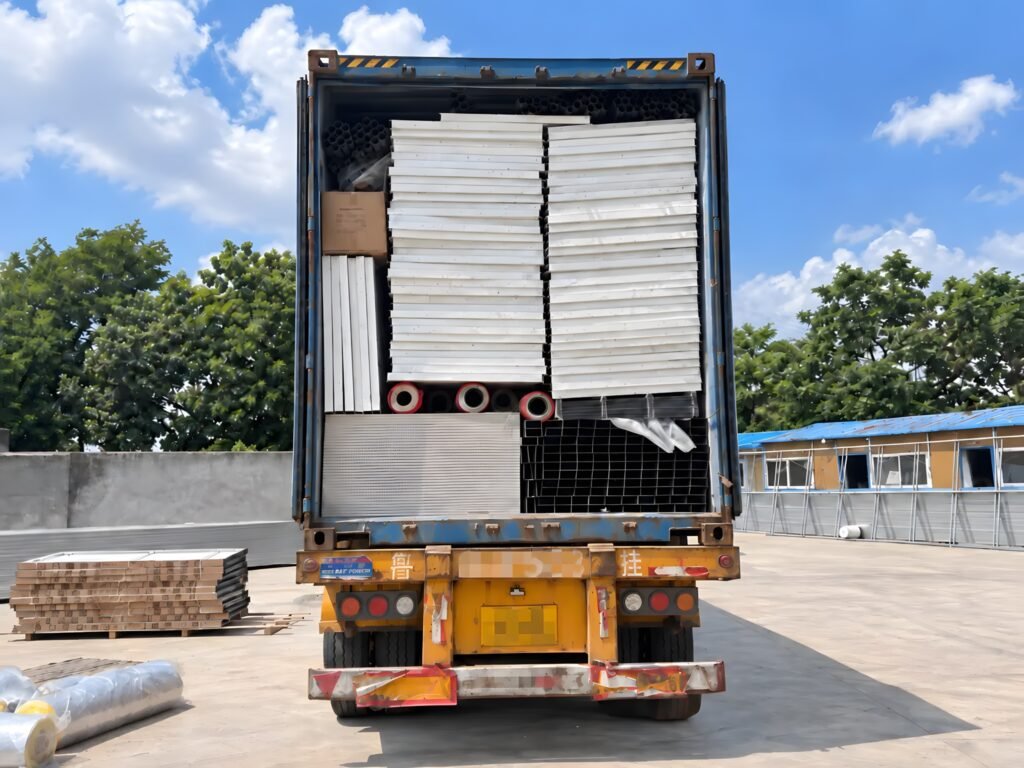
For route, port and inland transport planning, see the remote worker accommodation logistics guide.
5. Prepare the foundations and design inputs
Foundations, anchoring and structural design depend on the site. Ask the supplier for the foundation layout, levels and tolerances that apply to the offered system. Prepare the base to those drawings rather than to a general rule.
Give the supplier the site's design inputs:
- wind, snow and seismic conditions;
- temperature range and humidity;
- corrosion exposure, such as coastal air or mining dust.
Then check that the configuration sheet answers them: frame member sizes, wall and roof build-up, insulation and floor board.
A wall core rated as non-combustible describes the material. It does not describe the fire performance of the whole building, which must be reviewed against the destination's requirements.
If you need more than one storey, ask for a structural design specific to the project. A previous project does not establish what can be built on a new site.
6. Match services to the site supply
Remote sites often run on generators and stored water, and that changes what the units need.
On the electrical side:
- Confirm the voltage, frequency, socket type and protective devices for the destination.
- Check the electrical load of air conditioning and other equipment against the available supply.
- Specify the socket and plug type for the destination, and follow the destination's electrical rules and approvals. A certification from the country of manufacture is not an approval in the destination.
For water and drainage, show where the supply, storage, wastewater routing and any freeze protection will come from, and who connects the external services.
Sanitary and laundry needs are planned through the sanitary and laundry facilities scope. Larger camps are planned through the camp and site facilities plan.
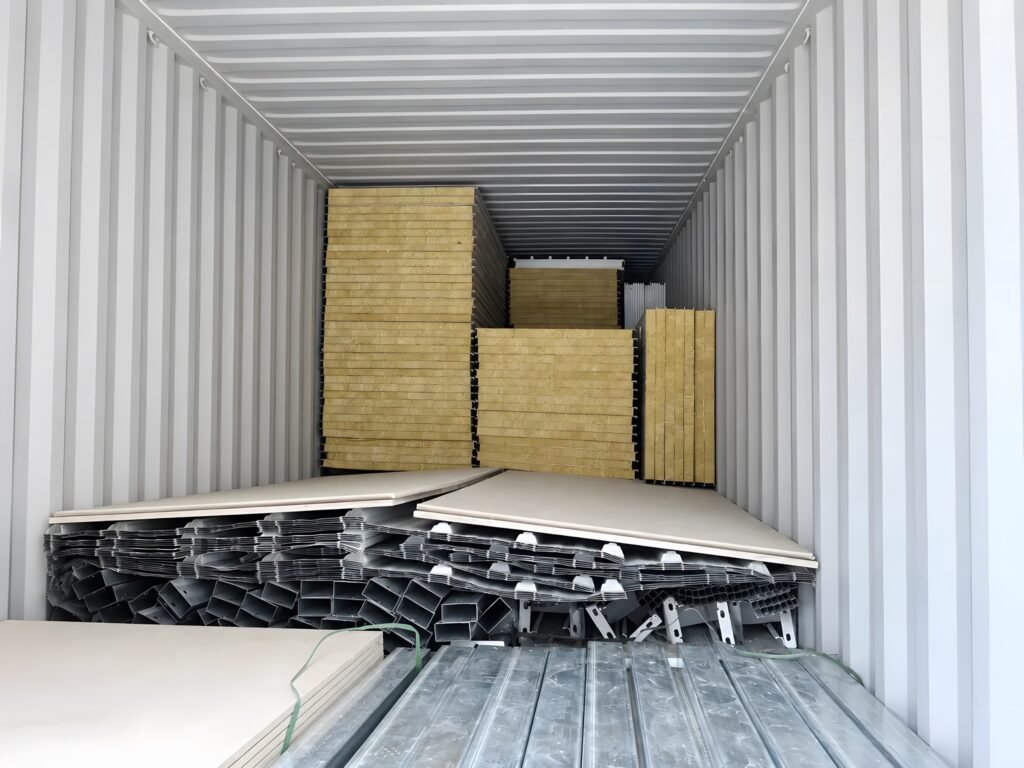
7. Protect components before assembly
Components may wait on site for days or weeks before they are assembled.
- Plan a dry, level and secure storage area.
- Keep packages off the ground, and store them in assembly order where possible.
- Check each delivery against the packing list on arrival.
- Photograph any damage before moving the packages, and report it within the agreed period.
8. Agree inspection and acceptance
Agree the inspection hold points before you order:
- receipt of the components;
- completion of the frame;
- completion of the enclosure and sealing;
- testing of the electrical and water services, where they are included.
At each point, check connection completion, dimensions, seals, roof drainage, doors and windows.
Decide who signs each inspection record. Agree how defects will be corrected when the supplier is far away, including how replacement parts are sent and who carries out the work.
After handover, the site team will maintain the seals and drainage on its own. Ask for maintenance guidance and a list of the parts most likely to need replacing.
Prepare a remote-site enquiry
A useful first enquiry gives the supplier enough to quote the whole delivery, not just the units. Include:
- the destination, site location and access route;
- the building use, number of units and room schedule;
- site conditions: wind, snow, seismic activity, temperature and corrosion exposure;
- the equipment and crew available for unloading and assembly;
- the power source, water supply and drainage arrangements;
- the programme and the date the units must be on site;
- the documents you need: configuration sheet, drawings, packing list and inspection records;
- the spare allowance and remote support you expect.
Mark undecided items as questions, so they can be resolved while the proposal is prepared. Ask the supplier to confirm what is included and excluded, item by item, in the drawings and quotation. You can review the detachable container house range before sending the brief.
Send your remote-site brief to PMH. Include the location, access route, quantity and the equipment you expect to have on site, so the reply can cover delivery, assembly and acceptance together.
Questions buyers ask
Do we need a crane to assemble detachable units?
That depends on the package weights, the site equipment and the assembly method. Ask the supplier for the heaviest package and the proposed lifting and handling plan for your site, rather than relying on a general claim.
How many units fit in one container?
It varies with the configuration, panels, doors, windows and accessories. Use the supplier's packing list as the shipping basis, not a general units-per-container figure.
Can detachable units be stacked?
Only where the project design and the structural calculation for the selected system and site allow it.
What is enough for a first conversation?
The destination, building use, approximate quantity, target timing, and the equipment and crew available on site. Room layouts and access constraints also help.