








Can Your Site Unload the Modules?
The truck is booked, the gate is open and the crew is waiting. Can the vehicle reach the unloading point, set down its load and leave without a last-minute change to the plan?
Use the actual load and vehicle details to agree the route, the unloading method and where each pack or module goes. Confirm who can accept the delivery before the truck sets off.
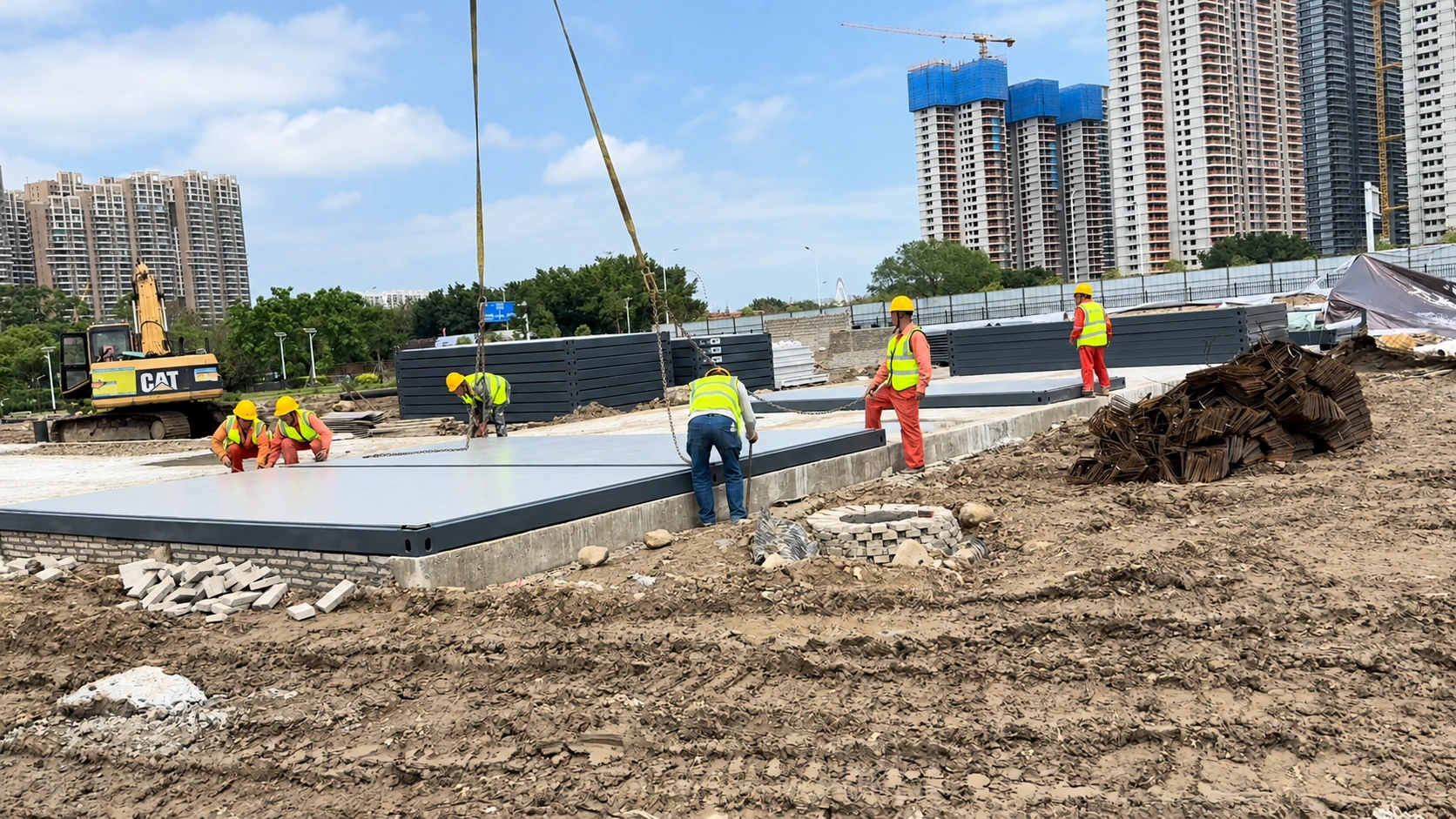
Can the Truck Reach the Unloading Point?
Walk the last part of the route with the vehicle details in hand. Start at the road turn into the gate and follow the truck to the unloading point, then trace how it will leave. Check gate width, bends, gradients, overhead obstructions and the places where site traffic crosses the route. Ask the haulier to confirm the vehicle and loaded dimensions before the site team approves that route.
Give the driver a gate contact, an arrival slot and a place to wait if unloading cannot begin. A fence moved overnight or a trench cut across the access road is enough reason to review the plan before dispatch. HSE guidance on loading and unloading areas covers vehicle movements, room to work and separation from other site traffic.
Agree How the Load Comes Off
Use the supplier’s packed dimensions, handling weights and lifting or handling information to brief the people doing the work. Have the competent local team confirm the method, working area and ground conditions for this site. Record who controls the operation and who can call it off if conditions change.
| Delivery format | What to confirm on site |
|---|---|
| Flat-pack | Check where the packs will be set down, how they are identified and which parts the assembly crew needs first. |
| Folding | Confirm how the unit comes off the vehicle and where the crew can unfold it using the instructions for the offered model. |
| Expandable | Check the travel dimensions for the truck route and the deployed dimensions and working clearance where the unit will open. |
Ask the site team to mark the unloading area and check that it still works with traffic and other crews on the same shift. HSE guidance on planning lifting operations explains the roles of the people who plan, supervise and carry out a lift.
Decide Where Each Load Goes
Mark the final positions and any temporary set-down area on the same site sketch. The site lead should confirm which supports are ready and which areas can hold staged loads. Put the module or pack reference beside each position so the person at the gate and the person receiving the load work from the same sequence.
For example, if the first building needs a floor pack and a separate bundle of connections, confirm both can be reached without moving the packs for the next building. Where several trucks share a gate, agree who calls each vehicle forward and how the sequence changes if one misses its slot.
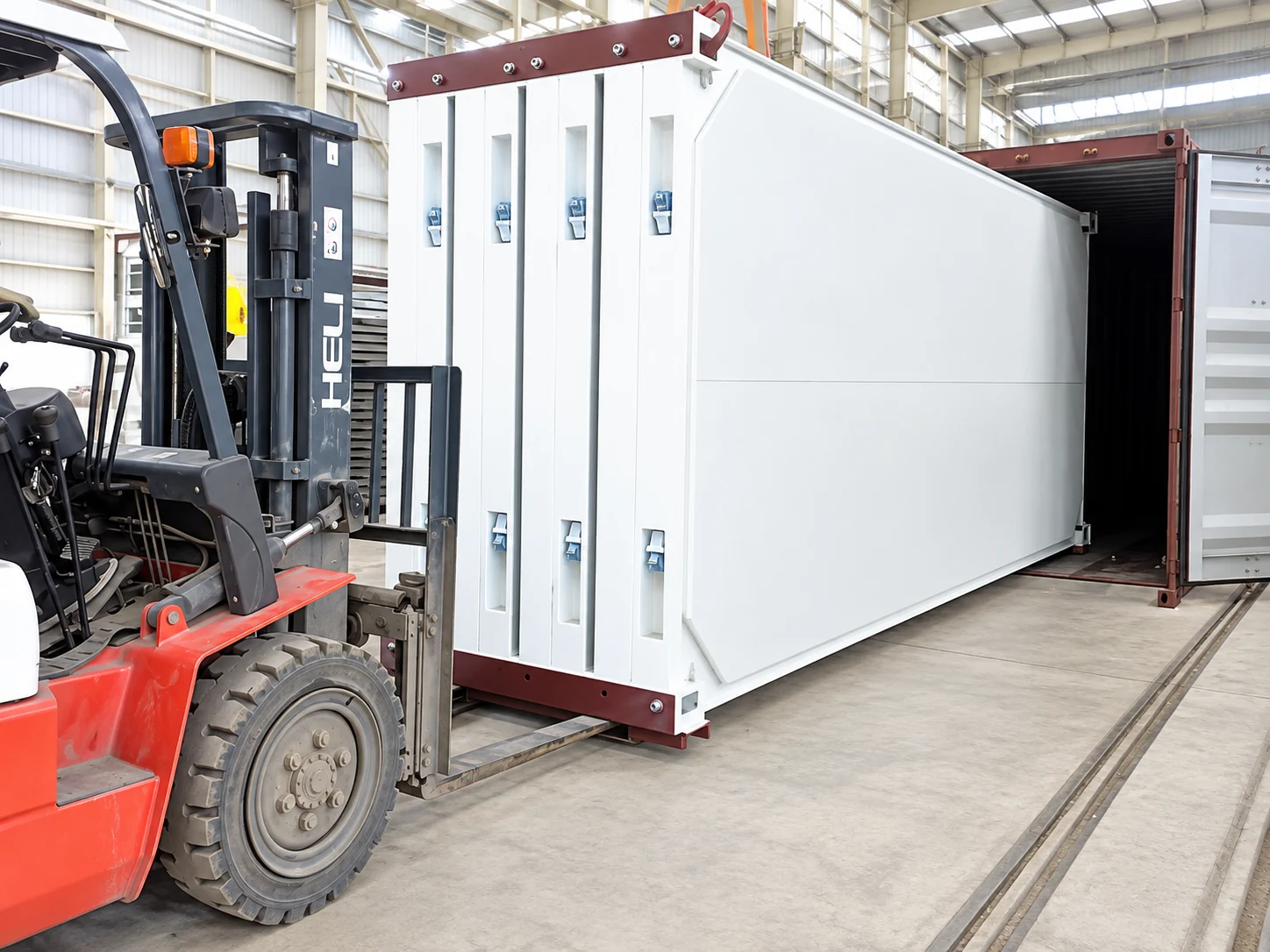
For supports, service points and the wider site programme, see our flat-pack camp site preparation guide.
Make the Readiness Call Before Dispatch
Get the supplier, haulier and site lead on the same call. Read back the truck slot, route, unloading area, receiving equipment, set-down positions and the person taking charge at each handover. Write down the name of the person who gives the go-ahead. If the unloading area or equipment is unavailable, keep the load at the agreed holding point or rebook the slot once the site lead has accepted a revised plan.
On arrival, match the units or packs against the delivery list and log visible damage or missing items before the driver leaves, following the agreed handover process. Record what has been received and what has been accepted for placement. The installation team still needs to verify any assembly, connection and commissioning steps in its own scope.
Put the Receiving Plan in Your Quote
Send Premium Modular House the destination, the approach and gate details, the approximate order and your intended delivery window. We can confirm the packed dimensions and weights for the proposed model, provide the pack list, and coordinate a delivery sequence with your receiving team.
Before you book transport, ask for unloading, site handling and installation responsibilities to be listed in the quotation. The team on site can then review the route, set-down locations and handling plan using the details for the load it will actually receive.