



Philippines PV Engineering Camp Case Study: A 278-Unit Flat Pack Modular Accommodation Project
Introduction
With the continuous growth of renewable energy development in the Philippines, large-scale solar projects are increasingly being built in remote areas where efficient accommodation and supporting facilities are essential for project operations.
For overseas PV engineering teams, establishing a reliable project camp is often challenging due to remote project locations, limited local infrastructure, tight construction schedules, and large workforce accommodation requirements.
Unlike urban construction projects, solar farms are frequently located in rural areas or developing regions where transportation conditions, local construction resources, and onsite workforce availability can affect project progress. Providing safe and comfortable living facilities for engineers, workers, and management teams becomes an important part of ensuring smooth project execution.
This article presents a Philippines PV engineering camp case study featuring a 278-unit flat pack modular accommodation project. The project demonstrates how modular accommodation solutions can support overseas solar developments by providing efficient, scalable, and reliable worker accommodation.
Through factory production, optimized transportation, and fast installation, modular buildings offer a practical worker accommodation solution for large-scale solar project accommodation requirements.
1. Challenges of Worker Accommodation for PV Projects in the Philippines
As solar energy projects continue to expand across the Philippines, providing suitable accommodation for construction teams has become a key challenge.
A successful PV construction camp needs to support workers throughout the entire construction process, including daily living, project management, and onsite operations.
However, many solar projects are developed in locations where traditional construction methods may face limitations, making it necessary to consider more flexible accommodation approaches.
1.1 Remote Locations and Limited Infrastructure
Many solar projects in the Philippines are located in areas with limited infrastructure, including:
- Rural areas
- Island regions
- Developing project sites
These locations often provide ideal conditions for renewable energy development but can create challenges when building accommodation facilities.
Common challenges include:
- Transportation difficulties: Remote locations may require longer delivery routes and more complex logistics planning.
- Limited construction resources: Local availability of materials, equipment, and skilled labor may not always meet project requirements.
- Longer traditional construction periods: Conventional building methods often require more onsite preparation and construction time.
For a large-scale solar project accommodation requirement, these challenges can affect project schedules and increase overall construction pressure.
Traditional construction may require transporting large quantities of materials to the site and organizing extensive onsite labor. In remote PV project locations, this process can lead to delays and higher costs.
Therefore, many international solar developers are looking for more efficient solutions that can simplify transportation, reduce onsite work, and accelerate accommodation deployment.
1.2 Large Workforce Accommodation Requirements
Large-scale PV projects typically involve multiple teams working simultaneously throughout the construction period.
A complete Philippines construction camp may need to provide accommodation and facilities for:
- Engineering teams
- Site workers
- Local employees
- Project management staff
The challenge is not only providing enough living space but also creating a complete working environment that supports daily project operations.
Depending on project requirements, a PV construction camp may include:
- Worker dormitories
- Site offices
- Dining facilities
- Supporting facilities
During peak construction periods, the number of workers can increase significantly, requiring accommodation capacity that can adapt quickly.
A flexible worker accommodation solution allows project owners to expand facilities according to workforce changes while maintaining efficient project management.
Compared with traditional construction, modular worker accommodation provides greater flexibility through standardized production and faster installation. This makes it suitable for solar projects where accommodation needs to be prepared within strict timelines.

2. Why Modular Accommodation Is Suitable for Solar Engineering Camps
For large-scale solar projects, selecting the right accommodation solution can directly affect construction efficiency and workforce management.
Compared with traditional construction methods, modular accommodation provides a more efficient approach for PV engineering camps by combining factory production, optimized transportation, and flexible design.
For overseas solar projects, especially those located in remote areas, a modular accommodation solution can help reduce onsite construction challenges while providing reliable facilities for workers and project teams.
A well-designed modular construction camp can support different project stages, from early construction activities to long-term site operations.
2.1 Fast Manufacturing and Project Deployment
One of the main advantages of modular accommodation is that major building components can be manufactured in a controlled factory environment before being delivered to the project site.
Unlike traditional construction, which requires most work to be completed onsite, modular buildings are produced and prepared in advance.
Key advantages include:
- Short production time: Factory manufacturing allows multiple components to be produced simultaneously, reducing overall preparation periods.
- Quality-controlled manufacturing: Production in a controlled environment helps maintain consistent quality and improves construction reliability.
- Reduced onsite construction: Less work needs to be completed at the project location, reducing dependence on local labor resources.
For solar engineering projects with strict schedules, a modular accommodation solution allows worker facilities to be deployed faster and helps project teams begin operations more efficiently.
This is especially valuable for PV projects where delays in accommodation construction can affect workforce deployment and overall project progress.
2.2 Efficient Transportation for Overseas Projects
Transportation is a major consideration for international solar projects, especially when construction sites are located in remote regions or areas with limited infrastructure.
A flat pack container house is designed to improve transportation efficiency through its compact packaging structure.
Compared with traditional construction materials, flat pack solutions provide advantages such as:
- Space-saving transportation: The flat-packed design reduces shipping volume and improves container loading efficiency.
- Easier overseas shipping: Standardized packaging makes international transportation more convenient.
- Suitable for remote project locations: The solution can be delivered to areas where conventional construction logistics are difficult.
For overseas PV engineering camps, the transportation advantages of a flat pack modular house help reduce logistics complexity and improve project deployment efficiency.
By optimizing shipping space and simplifying delivery, flat pack container houses provide a practical option for solar projects that require fast and reliable accommodation solutions.
2.3 Flexible Layout for Different Project Needs
Solar engineering camps usually require more than basic accommodation. Depending on project size and workforce requirements, facilities may need to include living spaces, management areas, and supporting services.
A modular worker accommodation system allows project owners to create flexible layouts based on actual site requirements.
A complete construction camp accommodation solution can include:
- Dormitory areas for workers and engineering teams
- Office areas for project management and administration
- Dining areas for daily meals and worker services
- Recreation spaces for improving onsite living conditions
The modular design allows different functional areas to be combined and adjusted according to project needs.
For solar farms and other large-scale renewable energy projects, this flexibility makes modular construction camps suitable for different workforce sizes and project phases.
Whether the requirement is a temporary construction camp or a long-term operational facility, modular accommodation provides a scalable solution that can adapt as project requirements change.

3. Project Overview: 278-Unit Flat Pack Modular Accommodation in the Philippines
To support the accommodation needs of a large-scale renewable energy project, this Philippines PV engineering camp was developed with a focus on efficient deployment, comfortable living conditions, and flexible site management.
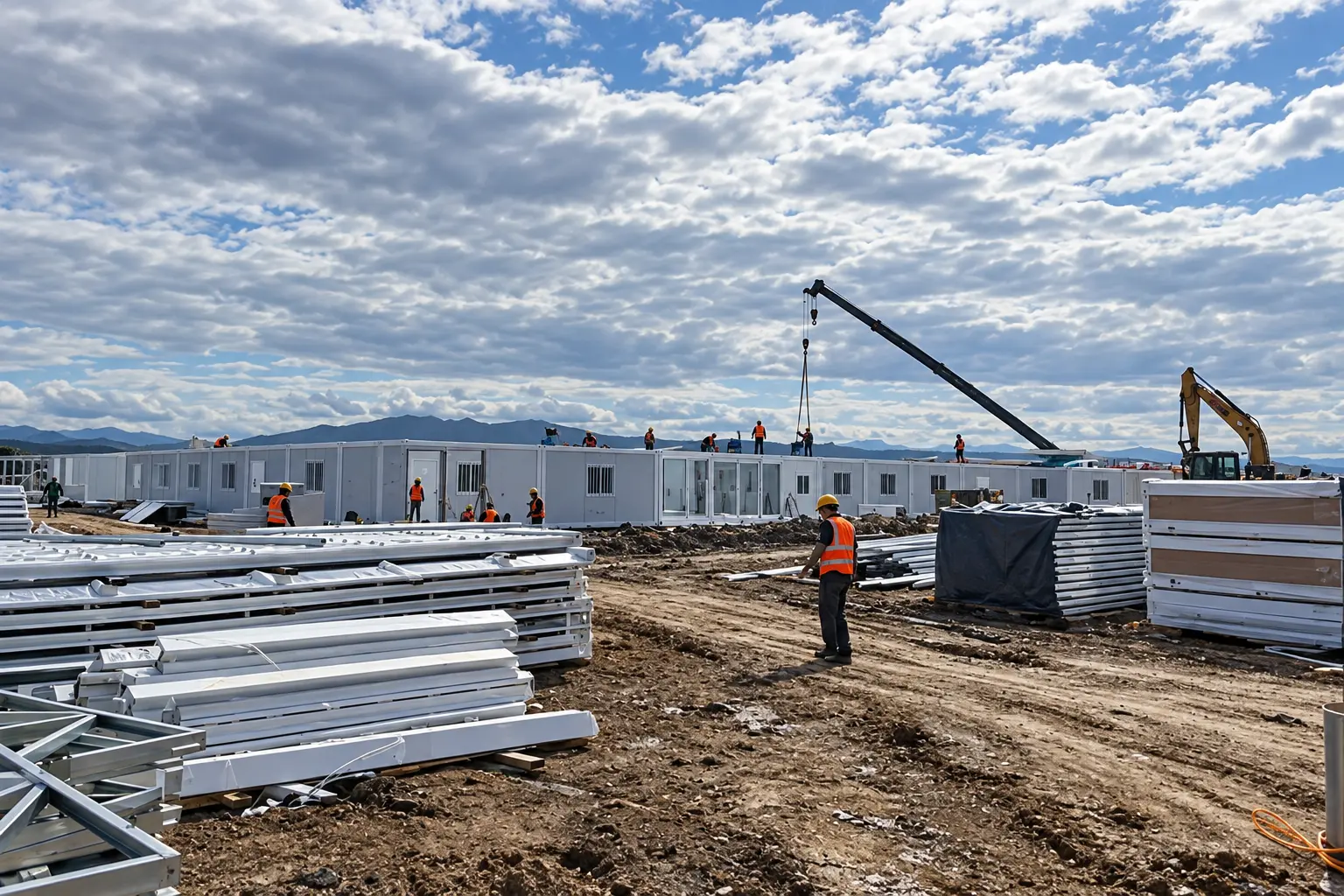
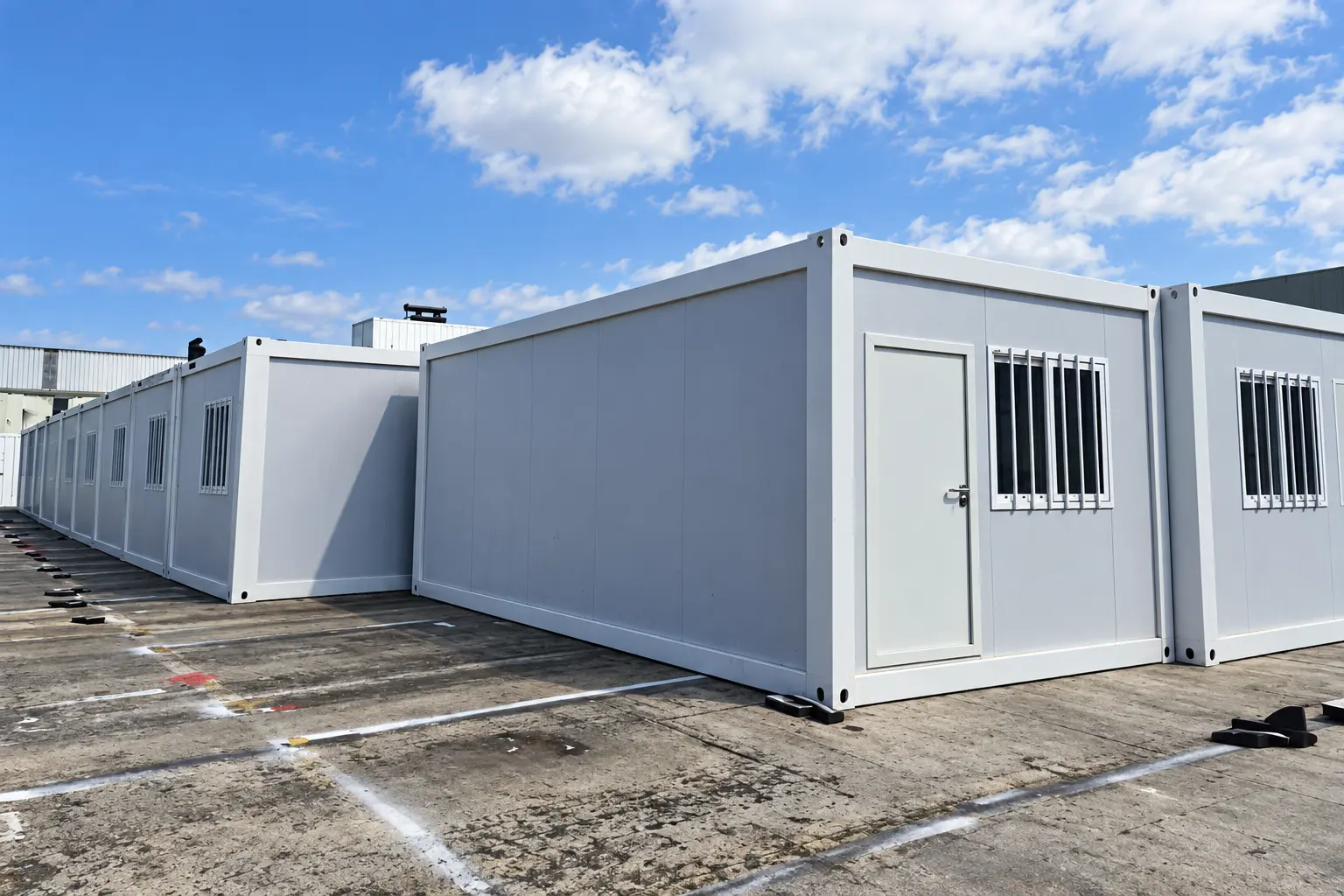
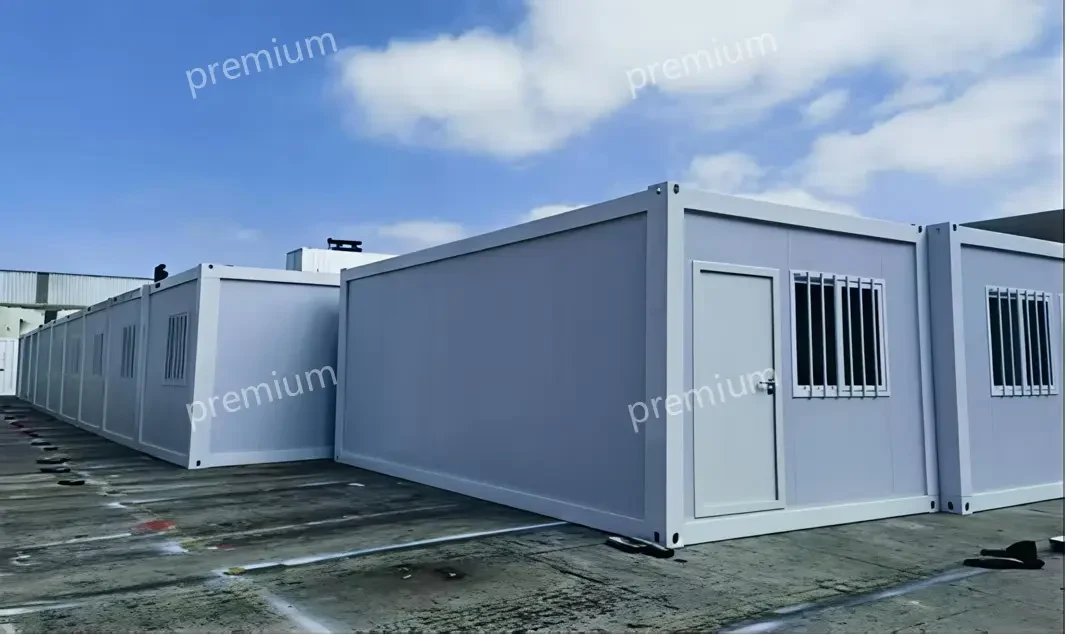
The project provided a 278 unit modular accommodation project using a flat pack container house solution, creating a complete construction camp for engineering teams and onsite workers.
By combining factory manufacturing, efficient transportation, and modular design, the project demonstrated how modular accommodation can support overseas solar construction projects with reliable and scalable facilities.
3.1 Project Background
This project provided 278 flat pack modular units for a Chinese PV engineering project in the Philippines.
As a large-scale solar development project, the site required accommodation facilities that could support different groups of personnel throughout the construction process.
The main project requirements included:
- Large-scale accommodation capacity
- Different accommodation standards for Chinese and local staff
- Complete living facilities
Due to the remote project environment and tight construction schedule, the project needed a solution that could be delivered efficiently while reducing onsite construction challenges.
Traditional construction methods would require longer preparation periods and more local construction resources. Therefore, the project adopted a modular approach to create a more efficient worker accommodation solution.
Through prefabricated production and streamlined installation, the modular camp could be prepared and deployed according to the project timeline while maintaining consistent quality standards.
3.2 Camp Layout and Functional Design
A successful engineering camp requires more than accommodation units. It needs a complete environment that supports daily operations, project management, and workforce coordination.
This modular camp solution was designed with different functional areas to meet the operational requirements of the PV project.
The main areas included:
Office Area
The office area was designed to support:
- Project management
- Engineering coordination
- Daily administrative operations
Having dedicated office facilities inside the camp helped improve communication efficiency between engineering teams and project management staff.
Accommodation Area
The accommodation area was planned to support different workforce groups, including:
- Chinese staff dormitories
- Local staff dormitories
The flexible design of modular buildings allowed different accommodation standards and layouts to be arranged according to user requirements.
Dining Area
A dedicated dining area was included to support:
- Daily meals
- Team management
- Worker welfare
For large-scale solar projects, providing complete supporting facilities helps create a more efficient and comfortable working environment.
3.3 Complete Facilities for Comfortable Living
For a long-term modular accommodation project, providing comfortable living conditions is just as important as meeting accommodation capacity requirements.
Each unit was designed with essential facilities to support daily living, including:
- En-suite bathroom
- Air conditioning
- Furniture
These features help ensure that workers can maintain a comfortable living environment throughout the project period.
Compared with basic temporary shelters, modern modular accommodation focuses not only on the number of units provided but also on:
- Comfort
- Living quality
- Local living habits
- Long-term operation requirements
For overseas construction projects, especially solar engineering camps located in remote areas, these factors directly influence worker satisfaction and project efficiency.
This 278 unit modular accommodation project demonstrates how a well-designed flat pack container house solution can provide a complete living environment for large-scale PV construction teams in the Philippines.

4. Advantages of Flat Pack Container Houses for PV Projects
For large-scale solar projects, accommodation solutions need to balance transportation efficiency, installation speed, and future flexibility.
A flat pack container house provides a practical solution for PV engineering camps because it is designed for overseas transportation, rapid deployment, and adaptable project requirements.
Compared with traditional construction methods, flat pack accommodation helps project teams reduce onsite challenges while creating reliable living facilities for workers and engineering personnel.
For renewable energy developments in the Philippines and other Southeast Asian markets, this type of modular building Philippines solution is becoming increasingly suitable for remote construction environments.
4.1 Space-Efficient Transportation
Transportation is one of the biggest challenges for overseas PV projects, especially when construction sites are located in remote areas.
Traditional construction methods often require large quantities of materials to be shipped separately, increasing logistics complexity and transportation costs.
The design of a flat pack container house helps improve transportation efficiency through its compact structure and optimized packaging.
Key advantages include:
- Reduced shipping volume: Flat-packed components occupy less transportation space compared with traditional prefabricated structures.
- Easier logistics planning: Standardized packaging makes delivery schedules easier to manage.
- Lower transportation challenges: Efficient loading and shipping help reduce difficulties when delivering units to remote project locations.
For a large-scale PV engineering camp, efficient transportation allows accommodation facilities to arrive faster and reduces delays before installation begins.
4.2 Fast Installation at Project Sites
Solar projects often operate under strict construction schedules, making installation speed a critical factor when selecting accommodation solutions.
A modular construction camp based on flat pack units can be installed quickly through a standardized assembly process.
The typical installation process includes:
- Foundation preparation
- Unit assembly
- Interior installation
- Final inspection
Compared with traditional construction, modular installation requires less onsite construction work and reduces dependence on large labor teams.
The main benefits include:
- Fast deployment: Accommodation facilities can become operational within a shorter timeframe.
- Simplified construction management: Standardized installation procedures make project coordination easier.
- Reduced onsite workload: More production work is completed before delivery.
For PV projects with urgent accommodation requirements, fast deployment helps engineering teams start operations more efficiently.
4.3 Expandable Solutions for Future Projects
Large-scale renewable energy projects often experience changing requirements during different development stages.
Worker numbers may increase, project timelines may extend, or additional facilities may be required.
A flexible modular accommodation solution allows project owners to adapt their facilities according to future needs.
Possible adjustments include:
- Adding more units: Additional accommodation capacity can be created when workforce requirements increase.
- Modifying layouts: Internal arrangements can be adjusted for different functions, including accommodation, offices, and supporting facilities.
- Relocating buildings: Modular units can be moved and reused for future projects when required.
This flexibility makes flat pack accommodation suitable not only for temporary construction phases but also for long-term project planning.
For solar developers and EPC contractors, choosing an expandable modular solution provides greater control over accommodation investment and future operational needs.

Flat Pack Container House Solutions
Explore practical flat pack container house solutions for construction sites, remote projects, worker accommodation, offices, and other modular building applications.
Designed for efficient transportation and fast installation, flat pack container house solutions provide a flexible option for companies developing projects in remote and challenging locations.
- Efficient transportation and compact packaging
- Fast and simplified onsite installation
- Flexible layouts for different project requirements
- Suitable for construction, mining, energy, and remote projects
5. Why Choose Modular Accommodation for Overseas Engineering Projects?
For companies involved in overseas construction projects, selecting the right accommodation solution is an important part of successful project execution.
Whether for solar farms, infrastructure developments, mining projects, or other large-scale engineering activities, project teams need accommodation facilities that can be deployed quickly, operate reliably, and adapt to changing requirements.
A professional modular camp solution helps overseas engineering companies overcome common challenges, including:
- Remote location challenges: Providing reliable accommodation in areas with limited infrastructure.
- Fast project schedules: Deploying worker facilities within strict construction timelines.
- Workforce accommodation needs: Supporting large numbers of workers, engineers, and project management teams.
Compared with traditional construction methods, modular accommodation provides a more flexible approach by combining factory production, efficient transportation, and faster onsite installation.
For companies searching for a reliable worker accommodation solution, choosing an experienced modular building supplier is essential.
Key Factors When Choosing a Modular Accommodation Supplier
Manufacturing Capability
A supplier with strong manufacturing capability can provide more reliable project support, especially for large-scale engineering projects.
Important considerations include:
- Production capacity
- Quality control systems
- Ability to handle large-volume orders
Professional factory production ensures that modular units can be delivered according to project schedules while maintaining consistent quality.
Export Experience
For international projects, overseas delivery experience is also an important factor.
A supplier should understand:
- International shipping requirements
- Export documentation
- Logistics coordination
- Remote project delivery processes
This experience helps reduce transportation risks and ensures that accommodation units can reach challenging project locations smoothly.
Customization Ability
Different engineering projects have different requirements depending on location, workforce size, and operating conditions.
A capable supplier should provide customized solutions, including:
- Accommodation layouts
- Office and supporting facilities
- Different functional areas
- Climate-adapted designs
This allows the modular camp solution to better match actual project needs.
Installation Support
Although modular buildings are designed for efficient assembly, professional installation guidance can further improve project efficiency.
Technical support may include:
- Installation instructions
- Layout planning
- Onsite assembly guidance
With proper support, overseas engineering teams can complete installation faster and begin project operations sooner.
Conclusion: Building Efficient Solar Project Accommodation with Modular Solutions
The Philippines PV engineering camp project demonstrates how modular accommodation solutions can support large-scale solar developments through efficient transportation, fast installation, and flexible layouts.
By using a flat pack container house system, overseas engineering companies can establish reliable solar project accommodation and complete project facilities even in remote and challenging environments.
As renewable energy and infrastructure projects continue expanding globally, flexible modular solutions provide an efficient way to meet growing worker accommodation requirements and support successful overseas construction projects.

Frequently Asked Questions About Philippines PV Engineering Camp Accommodation
1 What is a modular accommodation solution for solar projects? +
2 Why are flat pack container houses suitable for PV engineering camps? +
3 What was included in the Philippines PV engineering camp project? +
4 What facilities can be included in a modular worker accommodation camp? +
5 How long does it take to build a modular construction camp? +
6 Can modular accommodation be customized for different engineering teams? +
7 Are flat pack modular houses suitable for remote solar projects? +
8 How do I choose a modular accommodation supplier for overseas projects? +
Build Reliable Modular Accommodation for Solar Projects
Planning a solar farm, PV engineering project or overseas construction camp? Tell us your project location, workforce size, accommodation requirements and installation schedule. We will help you choose the right modular accommodation solution for your renewable energy project.
Project drawings, workforce requirements and site conditions help us recommend the most suitable modular accommodation solution.
Why Are Some People Afraid to Buy Modular Homes? Real Concerns Explained
Based in China, Premium Modular House is a professional prefabricated housing manufacturer and global supplier of prefab house, modular house, moving house, portable house, and flat pack container house.
With over 22 years of experience, we focus on providing durable, customizable, and eco-friendly prefab building solutions with fast installation, strong steel structure, and high efficiency.
As a trusted China factory, we serve clients in 80+ countries, offering one-stop modular housing systems designed for construction sites, camps, offices, and temporary accommodation.
Premium Modular House is committed to building smarter, faster, and greener — delivering innovative designs, reliable quality, and sustainable housing for global markets.