
Insights for Smarter Container House Projects
Products
Recommended for you

Send Your Inquiry
How to Reduce Accommodation Costs for Remote Construction Projects with Modular Buildings
Remote construction projects often face higher accommodation costs than projects located near major cities. Limited local infrastructure, long transportation distances, difficult site access, and large workforce requirements can all increase the cost of remote construction accommodation.
For EPC contractors, construction companies, and project owners, the challenge is not simply finding the cheapest building. The real goal is to control construction accommodation costs while meeting project schedules and workforce requirements.
This is where modular buildings and prefab accommodation can provide a more flexible approach. By combining factory production, efficient transportation, and faster installation, modular solutions can help reduce several cost factors throughout the project.
1. What Makes Remote Construction Accommodation Expensive?
The cost of remote site accommodation includes much more than the building itself. Several factors can significantly affect the final project budget.
Transportation and Logistics
Remote construction sites may be located far from cities, ports, or major roads. Materials and construction components may need to travel long distances before reaching the site.
Transportation costs can increase because of:
- Long-distance shipping
- Difficult road conditions
- Multiple deliveries
- Limited site access
- Special loading and unloading requirements
For this reason, transportation efficiency should be considered when selecting a remote worker accommodation solution.
On-Site Labor and Installation
Traditional construction often requires a large amount of work directly at the project site. This can include cutting, welding, assembly, finishing, and other construction activities.
For remote projects, bringing skilled workers and equipment to the site can increase labor and management costs.
A longer construction period can also delay the time when workers can move into the accommodation facilities.
Site Preparation and Infrastructure
Accommodation buildings may also require supporting infrastructure, including:
- Foundations
- Electrical connections
- Water supply
- Drainage systems
- Access roads
- Site preparation
These costs should be included when calculating overall construction accommodation costs.
Expansion and Relocation
Workforce requirements can change during a project. A site may start with 100 workers and later require accommodation for 300 or 500 workers.
If the original accommodation system is difficult to expand, additional construction or relocation may increase project costs.
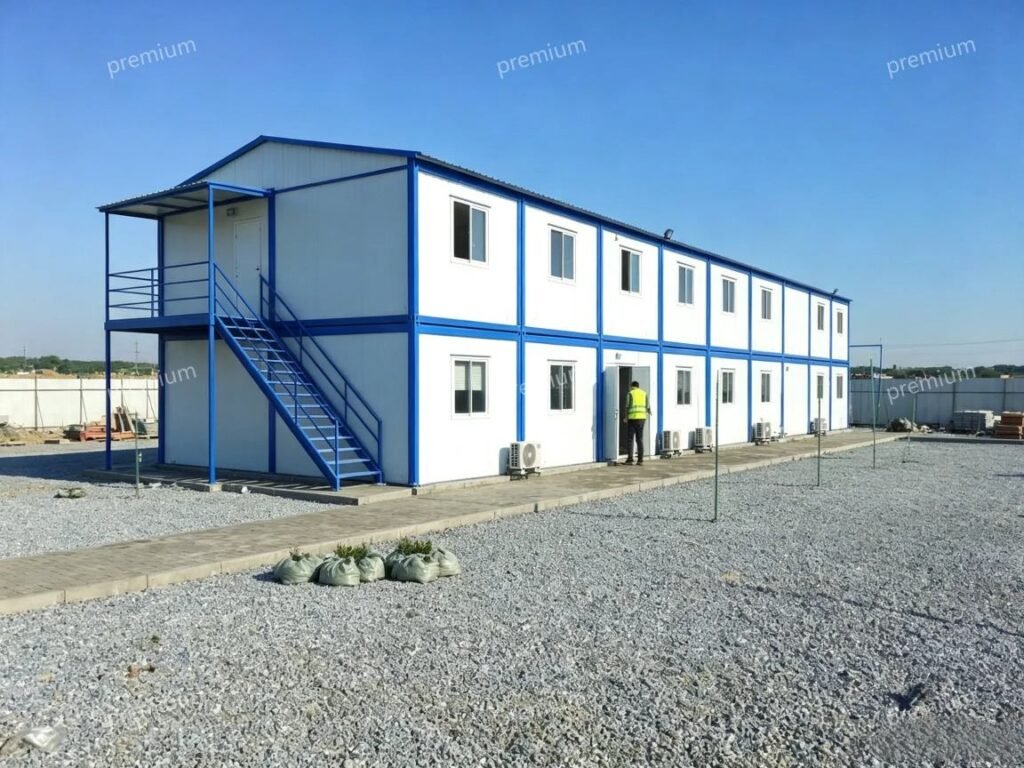
2. How Can Modular Buildings Reduce Accommodation Costs?
Modular buildings can help control accommodation costs by moving more of the construction process from the project site to a controlled factory environment.
The goal is not simply to make the building cheaper. Instead, modular accommodation can reduce costs associated with labor, transportation, installation, and future expansion.
Faster Installation
Modular accommodation is manufactured using standardized components before being transported to the project site.
This reduces the amount of construction work required on site and can shorten the installation period.
For projects with tight schedules, faster installation means workers can move into accommodation sooner and the project team can reduce the time spent managing temporary construction activities.
More Efficient Transportation
Transportation is especially important for remote projects.
A container house or prefab container house designed for efficient shipping can simplify logistics compared with transporting large quantities of separate construction materials.
Flat-pack designs can further improve shipping efficiency by reducing the volume required during transportation.
However, actual transportation savings depend on:
- Product design
- Shipping distance
- Number of units
- Freight rates
- Local site access
Therefore, transportation should be evaluated as part of the complete project cost rather than as a separate product price.
Reduced On-Site Work
Factory production allows many components to be prepared before delivery.
This can reduce the amount of:
- Cutting
- Welding
- Material handling
- Rework
- Finishing work
required at the construction site.
For remote projects where labor and equipment are more expensive, reducing on-site work can have a meaningful impact on the overall accommodation budget.
Easier Expansion
Modular buildings can also provide greater flexibility when workforce requirements change.
Additional dormitories, offices, dining facilities, or other buildings can be added as the project develops.
This makes modular accommodation solutions particularly useful for large construction projects with changing workforce requirements.
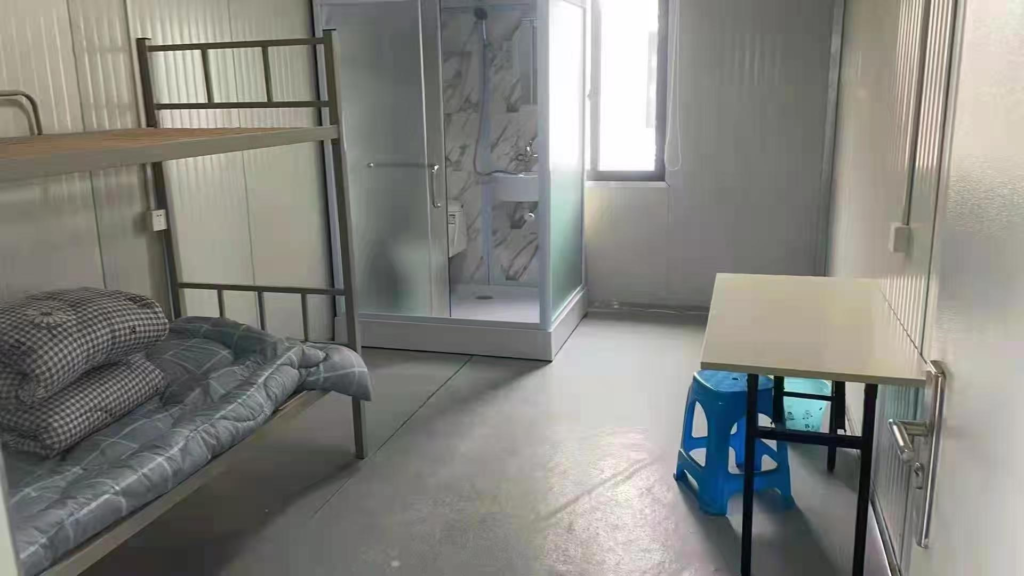
3. Container House vs Traditional Construction: Which Is More Cost-Effective?
When comparing accommodation options, it is important to look beyond the initial purchase price.
A traditional building may have a lower or higher initial construction cost depending on local conditions. However, the final cost can change significantly when transportation, labor, installation, and project duration are included.
| Cost Factor | Traditional Construction | Prefab Container House |
|---|---|---|
| Production | Mainly onsite | Factory production |
| Installation | Longer construction period | Faster assembly |
| On-site Labor | Higher | Lower |
| Transportation | Materials transported separately | Prefabricated components |
| Expansion | Requires additional construction | Easier modular expansion |
| Relocation | More difficult | More flexible |
For remote construction projects, the more useful comparison is therefore total project cost, rather than unit purchase price alone.
A prefab container house may provide advantages when a project requires fast deployment, efficient transportation, standardized production, and flexible expansion.
The right choice will still depend on the project location, workforce size, duration, local labor costs, transportation conditions, and required specifications.
4. What Should Be Included in the Total Cost of a Prefab Container House Project?
Before comparing suppliers, project owners should calculate the complete cost of the accommodation solution. Looking only at the factory price can make it difficult to understand the actual budget required for a remote construction project.
Product Cost
The basic prefab container house cost may include:
- Steel structure
- Wall and roof panels
- Doors and windows
- Electrical systems
- Interior finishes
- Basic fixtures
The exact specification can have a significant effect on the final price.
Transportation Cost
Transportation may include:
- International shipping
- Local trucking
- Loading and unloading
- Port or terminal charges
For overseas projects, the shipping method and number of units should be considered together with the product design.
Installation Cost
Installation costs can include:
- On-site labor
- Lifting equipment
- Foundation preparation
- Electrical and plumbing connections
A building with a lower purchase price may not necessarily have a lower installed cost.
Supporting Facilities
A complete construction camp accommodation project may also require:
- Water systems
- Drainage
- Air conditioning
- Furniture
- Kitchen facilities
- Dining areas
- Site offices
These facilities should be considered during the planning stage rather than added later.
Future Costs
Long-term projects should also consider:
- Maintenance
- Relocation
- Expansion
- Replacement of damaged components
A modular solution that can be expanded or relocated may provide additional value over the project lifecycle.
A useful way to evaluate the project is:
Total Project Cost = Product + Transportation + Installation + Site Preparation + Supporting Facilities + Future Costs
This approach provides a more realistic comparison between different prefab accommodation options.
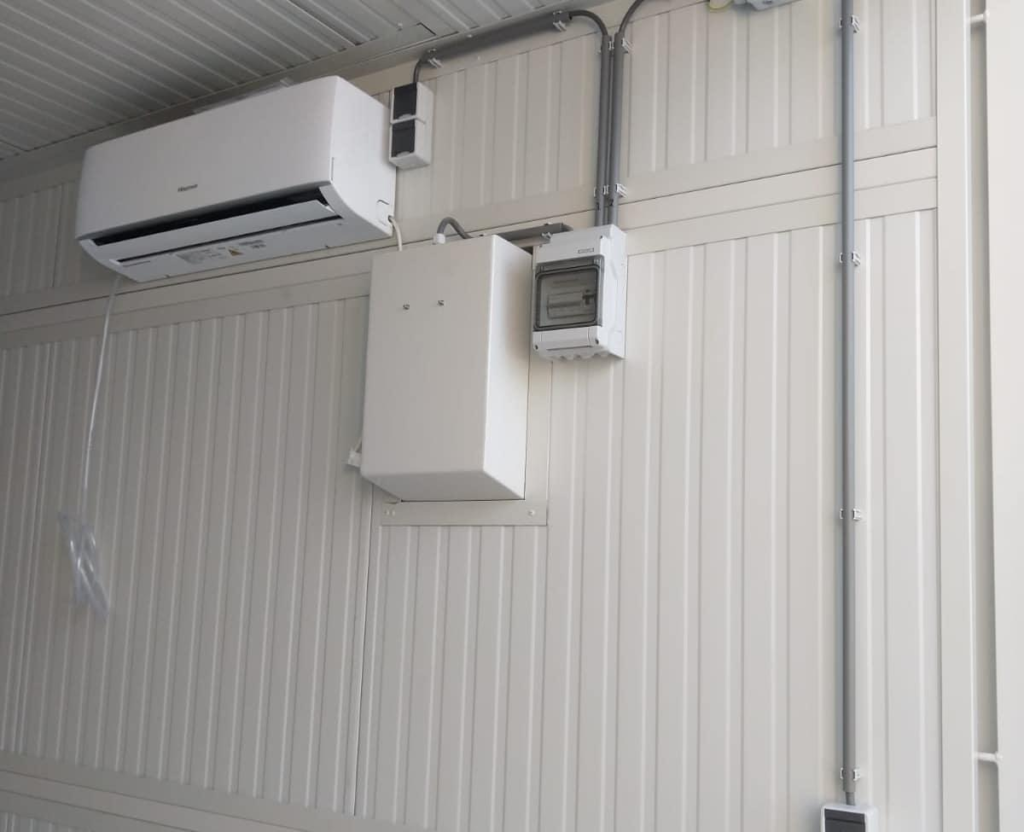
5. How to Choose a Cost-Effective Prefab Container House Supplier?
Choosing the right prefab container house supplier can have a major impact on the total cost of a remote accommodation project.
The lowest quotation is not always the most economical option. A reliable container house manufacturer should be able to provide a suitable product, accurate specifications, efficient logistics, and technical support.
Manufacturing Capability
Check whether the supplier has its own manufacturing facilities and sufficient production capacity.
Important factors include:
- Factory capacity
- Production equipment
- Quality control
- Production experience
A capable factory can also provide more consistent quality across large-volume projects.
Product Specifications
Do not compare suppliers based only on price per unit.
Compare the actual specifications, including:
- Steel structure
- Insulation
- Wall system
- Roofing
- Electrical system
- Fire safety
- Interior finishes
Two products may look similar but have very different specifications and long-term performance.
Transportation and Export Experience
For overseas projects, export experience is particularly important.
A supplier should understand:
- International shipping
- Product packaging
- Container loading
- Export documentation
- Overseas project logistics
This can help reduce unexpected logistics problems during delivery.
Customization Capability
Every remote project has different requirements.
The supplier should be able to adjust the modular accommodation solution according to:
- Workforce size
- Project duration
- Local climate
- Site conditions
- Building layout
- Facility requirements
This helps avoid both overbuilding and insufficient accommodation capacity.
Installation and Technical Support
Installation support can also affect project costs.
A reliable supplier should be able to provide:
- Installation drawings
- Technical documentation
- Assembly guidance
- Project communication
- After-sales support
For remote projects, good technical support can reduce installation errors and unnecessary delays.
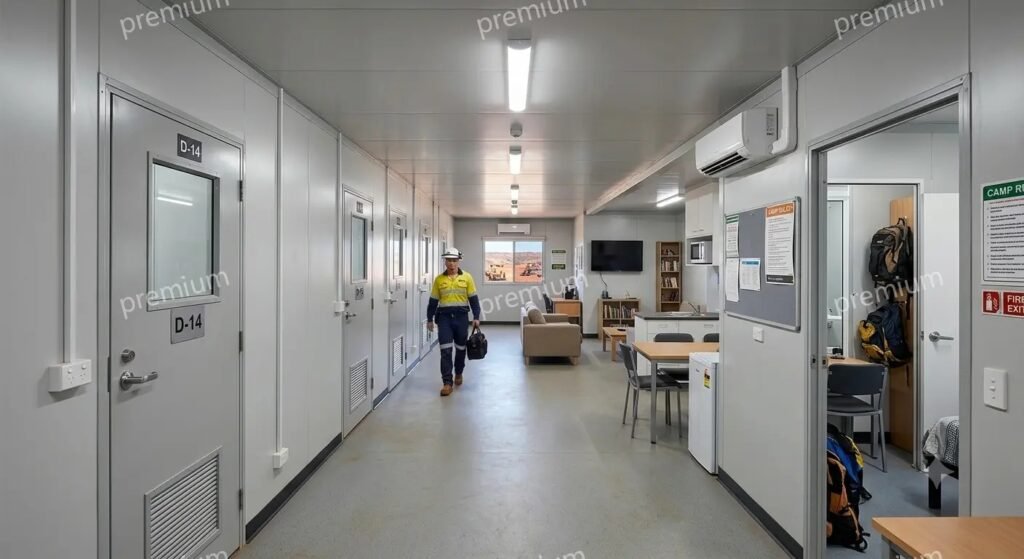
6. A Practical Checklist for Reducing Construction Accommodation Costs
Before purchasing accommodation for a remote construction project, project teams can review several key points to make sure the selected solution matches the project requirements and budget.
Before Choosing a Solution
- Define the workforce size
- Confirm project duration
- Check site accessibility
- Assess local climate
- Estimate transportation requirements
- Identify required facilities
Before Choosing a Supplier
- Compare complete product specifications
- Calculate transportation costs
- Estimate installation costs
- Check factory manufacturing capability
- Review overseas project experience
- Confirm technical support
- Compare total project cost
The key is to avoid making a decision based only on the lowest unit price. A complete evaluation of product quality, logistics, installation, and long-term project requirements can help construction companies control accommodation costs more effectively.
Conclusion
Reducing accommodation costs for remote construction projects is not simply about finding the cheapest building. The more important question is how much the complete accommodation project will cost from production to installation and future expansion.
Modular buildings and prefab container houses can help control these costs through faster installation, efficient transportation, reduced on-site work, and flexible expansion.
For EPC contractors, construction companies, and project owners, the best solution is one that balances product quality, logistics, installation, project schedule, and long-term value.
Looking for a cost-effective modular accommodation solution for your remote construction project? Premium Modular House can provide customized prefab building solutions based on your workforce size, site conditions, and project requirements.
Flat Pack Container House for Remote Construction Projects
Explore practical flat pack container house solutions for remote construction projects, worker accommodation, site offices, and modular construction camps.
Designed for efficient transportation and fast installation, flat pack container house solutions provide a flexible accommodation option for construction companies, EPC contractors, and remote project teams.
- Efficient transportation and compact packaging
- Fast and simplified onsite installation
- Flexible layouts for worker accommodation and offices
- Suitable for remote construction and infrastructure projects
Frequently Asked Questions About Remote Construction Accommodation
1. How can modular buildings reduce remote construction accommodation costs? +
2. What factors affect remote construction accommodation costs? +
3. Is a prefab container house cheaper than traditional construction? +
4. What should be included in the total cost of a prefab container house? +
5. Are flat pack container houses suitable for remote construction sites? +
6. How do I choose a cost-effective prefab container house supplier? +
7. Can modular accommodation be expanded when the workforce increases? +
8. What information should I provide when requesting a quotation? +
Reduce Accommodation Costs with Modular Building Solutions
Planning a remote construction project or worker accommodation camp? Tell us your project location, workforce size, accommodation requirements and installation schedule. We can help you choose a practical modular accommodation solution based on your project needs.
Project location, workforce requirements and site conditions help us recommend the most suitable modular accommodation solution.
Why Are Some People Afraid to Buy Modular Homes? Real Concerns Explained
Based in China, Premium Modular House is a professional prefabricated housing manufacturer and global supplier of prefab house, modular house, moving house, portable house, and flat pack container house.
With over 22 years of experience, we focus on providing durable, customizable, and eco-friendly prefab building solutions with fast installation, strong steel structure, and high efficiency.
As a trusted China factory, we serve clients in 80+ countries, offering one-stop modular housing systems designed for construction sites, camps, offices, and temporary accommodation.
Premium Modular House is committed to building smarter, faster, and greener — delivering innovative designs, reliable quality, and sustainable housing for global markets.